Would you like to switch to the accessible version of this site?

Go to accessible site Close modal window

Don't need the accessible version of this site?

Hide the accessibility button Close modal window
Accessibility View Close toolbar
Animal Health Center of Port St. Lucie

1861 SW Gatlin Blvd

Port St Lucie, FL 34953 US

772-873-4745

Open mobile navigation
  • Home
  • New Patient Center
    • What to Expect
    • Veterinary Resources
    • Payment Options
  • About Us
    • Services
    • Meet Our Team
    • Boarding Services
    • Hospital Tour
      • Reception Area
      • Laboratory
      • Surgery and Dental
      • Kennel
      • Building
  • Canine Information
    • Basic Health
    • Heartworm & Intestinal Parasites
    • Osteoarthritis
    • Eye Care
    • Diseases & Vaccination
    • Canine Influenza
    • Crate Training
    • Housebreaking
    • Behavior
  • Feline Information
    • Feline Basic Care
    • Diseases & Vaccination
    • Eye Care
    • Administering Medication
    • Senior Cats
    • Feline Dental Care
  • Pet Information
    • Surgical
    • Anesthesia
    • Medical Services
    • Toxic Plants and Foods
    • Senior Healthcare Checklist
    • Household dangers
    • Traveling with your Pet
  • Pet Loss
    • The Grieving Process
    • Goodbye Friend
    • Grief Management in Children
    • Pet Loss Resources
    • Pet Loss Myths
    • Helping Friends
  • Contact Us
  • Blog
  • Veterinary Topics
    • Pet Health
      • Chronic Conditions
      • Digestive and Oral Health
      • Diseases and Viruses
      • Pests and Parasites
      • Orthopedics
    • Today's Veterinarian
    • Choosing Your Pet
      • Finding Your Pet
      • Cats
      • Dogs
      • Exotics
        • Amphibians
        • Birds
        • Reptiles
          • Lizards
          • Turtles
      • Small Mammals
        • Ferrets
        • Rabbits
        • Domesticated Animals
          • Prairie Dogs
        • Pocket Pets
          • Chinchillas
          • Guinea Pigs
          • Hamsters
          • Hedgehogs
          • Rats
      • Livestock
        • Cows
        • Donkeys, Horses & Mules
        • Goats
        • Pigs
        • Poultry
        • Sheep
    • Living With Your Pet
      • Bringing Your Pet Home
      • Children and Pets
      • Providing Care
      • Travel
      • Saying Goodbye
    • Newsletter Library
      • Cats
      • Tips for Pet Owners
      • Behavior & Training
      • Fleas & Parasites
      • Keeping Pets Healthy
      • Recognizing Illness
      • Nutrition & Food
      • Pet Dangers
      • Seasonal Topics
      • Visiting the Vet
      • Equine
      • Newsletter Archive
        • Fun with Pets
        • Unbelievable Pets
    • Video Newsroom
      • Health Topics
      • Technology and Science
      • Other Interests
    • Newsletter Library
    • Client Survey
    • Pets4Kids
  • Home >
  • Articles >
  • Newsletter Library >
  • Pet Dangers >
  • Make Your House Pet Friendly

Make Your House Pet Friendly

  • Created in Newsletter Library, Pet Dangers
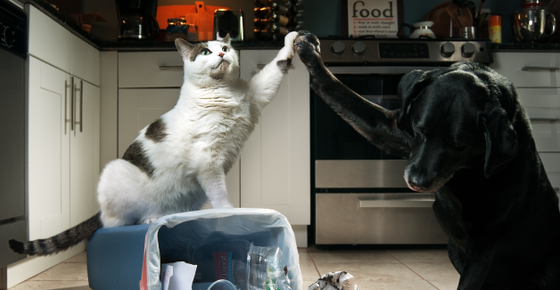
Image of a dog and cat celebrating after knocking over the kitchen garbage.

Keeping your house pet friendly is critical to the health and wellness of your pets. Just what does pet friendly mean? A pet friendly house is a sheltered location for an animal to live, play and relax that is clean, safe, free from hazards and toxic materials. Most pets share house space with their owner. Household items used in a house by an owner are available to the pets. Many of these materials used by owners can be unsafe or deadly to pets.

"Properly storing and locking up hazardous items is the first step to preventing accidental poisonings," advises Janet Tobiassen Crosby, DVM in Common Household Poisons. If you haven't made your house pet friendly, do it now. It will be easiest to move from one room to another checking closets, cabinets, boxes, shelves, and drawers. Yes, drawers - adept, curious pets can easily get into them!

"Not only can a poisoning incident be life-threatening for the pet, it's traumatic for the pet owner," said Carol McConnell, DVM, vice president and chief veterinary medical officer for Veterinary Pet Insurance. "We recommend that pet owners be aware of which items around their homes can be harmful to their pets-medications, insect poisons, chocolate and certain nuts-and keep these items safely out of reach. They shouldn't assume that their pets will ignore that bottle of bleach in the laundry room or the Philodendron plant by the window. Our data shows this just isn't so."

It could be a good idea to isolate your pet for a few minutes while you remove and secure substances that can be harmful. Pets may enjoy chewing through storage containers you consider safe. Remember that child-proof does not mean pet proof!

Common Household Poisons by veterinarian Janet Tobiassen Crosby suggests properly storing and securing items that can harm your pet. Ensure that they are stored up high and out of reach of all pets (and children) in your home. Your pet doesn't know ingesting these items can harm or kill them.

Household Cleaners and Chemicals
These items are used to maintain your home, the furnishings, and items in it. They may be located in your laundry room, kitchen, bathrooms, or garage. Secure abrasives, soaps, waxes, disinfectants, powders, aerosol and pump sprays, paints, lubricants, bleach, fabric softeners, and water softener supplies.

Flea and Tick Treatments
In addition to storing where pets cannot reach or gain access to these items, use only the recommended doses. Always follow the dosing schedule.

Antifreeze (Ethylene glycol)
Pets can be attracted to this sweet tasting, brightly colored liquid. "One swallow may be lethal for small animals," Crosby advises.

Pest Control Baits and Poisons
These are baits you're using to attract pests and they can also attract your pet! Beware.

Medications
"One of the most common household poisons are medications - either discovered by the pet or purposely administered by the owner," Crosby says. Your veterinarian must guide you with giving any medications to your pets. Over-the-counter and prescription drugs require authorization from your veterinarian. "Accidental poisonings, especially from NSAIDs are very common," she says.

Foods and Food Additives
Xylitol is an artificial sweetener that can be toxic to animals. It is often found in foods labeled as "sugar free." Chocolate, caffeine, raisins, and grapes are known toxins for pets.

Trash Cans
"The sheer mix of items in a trash can (may) make a pet owner forget the combined potential hazard," alerts Crosby. Cleanser containers, food scraps, broken and sharp objects could severely harm a pet who wouldn't usually bother a trash can. "Make sure your trash is secure."

Sources:

Crosby, Janet Tobiassen, DVM. Common household poisons.

Crosby, Janet Tobiassen, DVM. Top 10 pet poison prevention tips.

Veterinary Pet Insurance.

  • Pet Health
    • Chronic Conditions
    • Digestive and Oral Health
    • Diseases and Viruses
    • Pests and Parasites
    • Orthopedics
  • Today's Veterinarian
  • Choosing Your Pet
    • Finding Your Pet
    • Cats
    • Dogs
    • Exotics
      • Amphibians
      • Birds
      • Reptiles
        • Lizards
        • Turtles
    • Small Mammals
      • Ferrets
      • Rabbits
      • Domesticated Animals
        • Prairie Dogs
      • Pocket Pets
        • Chinchillas
        • Guinea Pigs
        • Hamsters
        • Hedgehogs
        • Rats
    • Livestock
      • Cows
      • Donkeys, Horses & Mules
      • Goats
      • Pigs
      • Poultry
      • Sheep
  • Living With Your Pet
    • Bringing Your Pet Home
    • Children and Pets
    • Providing Care
    • Travel
    • Saying Goodbye
  • Newsletter Library
    • Cats
    • Tips for Pet Owners
    • Behavior & Training
    • Fleas & Parasites
    • Keeping Pets Healthy
    • Recognizing Illness
    • Nutrition & Food
    • Pet Dangers
    • Seasonal Topics
    • Visiting the Vet
    • Equine
    • Newsletter Archive
      • Fun with Pets
      • Unbelievable Pets
  • Video Newsroom
    • Health Topics
    • Technology and Science
    • Other Interests
  • Newsletter Library
  • Client Survey
  • Pets4Kids

Featured Services

  • Online Store

    Shop Online Now!
  • Make An Appointment

    We will do our best to accommodate your busy schedule. Schedule an appointment today!
  • Services

    We strive to provide complete care for our patients. Learn more about all the services we provide.

Office Hours

Monday:

8:00 am-6:00 pm

Tuesday:

8:00 am-6:00 pm

Wednesday:

8:00 am-6:00 pm

Thursday:

8:00 am-6:00 pm

Friday:

8:00 am-6:00 pm

Saturday:

8:00 am-5:00 pm

Sunday:

Closed

Location

Find us on the map

Testimonial

  • "Patient testimonials coming soon..."

Featured Articles

Read about interesting topics

  • March Newsletter: How to Keep Your Cat Safe When Outdoors

    Wondering how your cat can safely spend time outdoors? ...

    Read More
  • March Newsletter: How to Choose Safe Blankets for Pets

    Do you know how to pick a safe blanket for your pet? ...

    Read More
  • February Newsletter: How to Reduce Dental Anxiety in Pets

    Does your pet hate toothbrushing? These tips could reduce dental anxiety. ...

    Read More
  • February Newsletter: How to Safely Change Your Cat’s Food

    Buying a new food for your cat? Find out how to switch foods safely. ...

    Read More
  • January Newsletter: Signs Your Pet Needs a Wellness Exam

    Does your pet need a wellness exam? ...

    Read More
  • January Newsletter: How Your Veterinarian Can Help If Your Pet Ingests Something Toxic

    Has your pet eaten something it shouldn't have? Find out how your vet can help. ...

    Read More
  • December Newsletter: Signs Your Pet Needs a Professional Cleaning

    Do you know when your pet needs a professional cleaning? ...

    Read More
  • December Newsletter: Simple Ways to Keep Your Home Flea-Free for Your Pet’s Well-being

    Never want to see another flea again? Try these tips for a flea-free home. ...

    Read More
  • November Newsletter: The Importance of Bloodwork for Your Pet’s Health

    Wondering if your pet really needs bloodwork? Find out the benefits of blood tests for your furry friend. ...

    Read More
  • November Newsletter: Turkey Day Tips for Pet Owners

    Don't forget about your pet when making Turkey Day preparations. ...

    Read More

Newsletter Sign Up

Connect With Us

  • Copyright © 2026 MH Sub I, LLC dba iMatrix.
  • Admin Log In
  • Site Map