Would you like to switch to the accessible version of this site?

Go to accessible site Close modal window

Don't need the accessible version of this site?

Hide the accessibility button Close modal window
Accessibility View Close toolbar
Animal Health Center of Port St. Lucie

1861 SW Gatlin Blvd

Port St Lucie, FL 34953 US

772-873-4745

Open mobile navigation
  • Home
  • New Patient Center
    • What to Expect
    • Veterinary Resources
    • Payment Options
  • About Us
    • Services
    • Meet Our Team
    • Boarding Services
    • Hospital Tour
      • Reception Area
      • Laboratory
      • Surgery and Dental
      • Kennel
      • Building
  • Canine Information
    • Basic Health
    • Heartworm & Intestinal Parasites
    • Osteoarthritis
    • Eye Care
    • Diseases & Vaccination
    • Canine Influenza
    • Crate Training
    • Housebreaking
    • Behavior
  • Feline Information
    • Feline Basic Care
    • Diseases & Vaccination
    • Eye Care
    • Administering Medication
    • Senior Cats
    • Feline Dental Care
  • Pet Information
    • Surgical
    • Anesthesia
    • Medical Services
    • Toxic Plants and Foods
    • Senior Healthcare Checklist
    • Household dangers
    • Traveling with your Pet
  • Pet Loss
    • The Grieving Process
    • Goodbye Friend
    • Grief Management in Children
    • Pet Loss Resources
    • Pet Loss Myths
    • Helping Friends
  • Contact Us
  • Blog
  • Veterinary Topics
    • Pet Health
      • Chronic Conditions
      • Digestive and Oral Health
      • Diseases and Viruses
      • Pests and Parasites
      • Orthopedics
    • Today's Veterinarian
    • Choosing Your Pet
      • Finding Your Pet
      • Cats
      • Dogs
      • Exotics
        • Amphibians
        • Birds
        • Reptiles
          • Lizards
          • Turtles
      • Small Mammals
        • Ferrets
        • Rabbits
        • Domesticated Animals
          • Prairie Dogs
        • Pocket Pets
          • Chinchillas
          • Guinea Pigs
          • Hamsters
          • Hedgehogs
          • Rats
      • Livestock
        • Cows
        • Donkeys, Horses & Mules
        • Goats
        • Pigs
        • Poultry
        • Sheep
    • Living With Your Pet
      • Bringing Your Pet Home
      • Children and Pets
      • Providing Care
      • Travel
      • Saying Goodbye
    • Newsletter Library
      • Cats
      • Tips for Pet Owners
      • Behavior & Training
      • Fleas & Parasites
      • Keeping Pets Healthy
      • Recognizing Illness
      • Nutrition & Food
      • Pet Dangers
      • Seasonal Topics
      • Visiting the Vet
      • Equine
      • Newsletter Archive
        • Fun with Pets
        • Unbelievable Pets
    • Video Newsroom
      • Health Topics
      • Technology and Science
      • Other Interests
    • Newsletter Library
    • Client Survey
    • Pets4Kids
  • Home >
  • Articles >
  • Choosing Your Pet >
  • Small Mammals >
  • Pocket Pets >
  • Guinea Pigs

Guinea Pigs

  • Created in Choosing Your Pet, Small Mammals, Pocket Pets, Guinea Pigs

guinea pigs

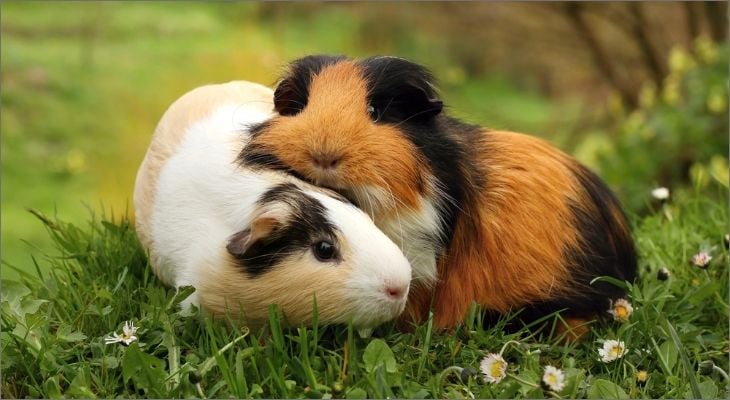
Curious and inquisitive by nature, guinea pigs make great pets. These little bundles of fur are quite social and enjoy spending time with the people who handle, feed, and groom them. As a pet, guinea pigs are relatively low maintenance, rarely aggressive, and fun to own.

How to Care

Guinea pigs are playful, especially during the morning and late evening hours. These guys like to nap a lot during the day. You'll want to make sure your pet is getting plenty of exercise and interaction with your family to ensure good health.

Your guinea pig will spend most of its time in a plastic or wire cage. The cage needs to be bigger than you might think -- 7.5 square feet for one guinea pig and 10.5 square feet for two is ideal. A solid floor is better than a wire floor. Your veterinary team often sees guinea pigs with broken feet and legs caused by wire cage floors. Regardless of the floor, be sure to use soft bedding like fleece or flannel as guinea pigs can develop sores on their feet.

Some guinea pig breeds require more grooming than others. For example, a silkie has longer hair that needs to be brushed quite often. You may want to bathe your guinea pig occasionally, especially if he or she isn't doing the job adequately.

Training

Guinea pigs can be trained to follow simple commands, especially if you use food as a prompt. They can be taught to come to you or to sit up and beg. Some guinea pigs can be taught to use a litter box, but they're not always consistent so don't rely on this method. Guinea pigs drink from a water bottle attached to the side of his cage, but some can be trained to drink from a bowl.

Health

Your guinea pig will not need to be spayed or neutered unless you plan to house a male and a female together. If so, our team can advise you on this procedure.

Diet

Guinea pigs are herbivores who eat a plant-based diet. Feed a commercial pellet food to ensure your pet gets the vitamin C it needs. It is also recommended to supplement your guinea pig's diet with grass, hay, or leafy greens like green leaf lettuce. Avoid kale and spinach as dark greens have too much calcium for guinea pigs.

  • Pet Health
    • Chronic Conditions
    • Digestive and Oral Health
    • Diseases and Viruses
    • Pests and Parasites
    • Orthopedics
  • Today's Veterinarian
  • Choosing Your Pet
    • Finding Your Pet
    • Cats
    • Dogs
    • Exotics
      • Amphibians
      • Birds
      • Reptiles
        • Lizards
        • Turtles
    • Small Mammals
      • Ferrets
      • Rabbits
      • Domesticated Animals
        • Prairie Dogs
      • Pocket Pets
        • Chinchillas
        • Guinea Pigs
        • Hamsters
        • Hedgehogs
        • Rats
    • Livestock
      • Cows
      • Donkeys, Horses & Mules
      • Goats
      • Pigs
      • Poultry
      • Sheep
  • Living With Your Pet
    • Bringing Your Pet Home
    • Children and Pets
    • Providing Care
    • Travel
    • Saying Goodbye
  • Newsletter Library
    • Cats
    • Tips for Pet Owners
    • Behavior & Training
    • Fleas & Parasites
    • Keeping Pets Healthy
    • Recognizing Illness
    • Nutrition & Food
    • Pet Dangers
    • Seasonal Topics
    • Visiting the Vet
    • Equine
    • Newsletter Archive
      • Fun with Pets
      • Unbelievable Pets
  • Video Newsroom
    • Health Topics
    • Technology and Science
    • Other Interests
  • Newsletter Library
  • Client Survey
  • Pets4Kids

Featured Services

  • Online Store

    Shop Online Now!
  • Make An Appointment

    We will do our best to accommodate your busy schedule. Schedule an appointment today!
  • Services

    We strive to provide complete care for our patients. Learn more about all the services we provide.

Office Hours

Monday:

8:00 am-6:00 pm

Tuesday:

8:00 am-6:00 pm

Wednesday:

8:00 am-6:00 pm

Thursday:

8:00 am-6:00 pm

Friday:

8:00 am-6:00 pm

Saturday:

8:00 am-5:00 pm

Sunday:

Closed

Location

Find us on the map

Testimonial

  • "Patient testimonials coming soon..."

Featured Articles

Read about interesting topics

  • March Newsletter: How to Keep Your Cat Safe When Outdoors

    Wondering how your cat can safely spend time outdoors? ...

    Read More
  • March Newsletter: How to Choose Safe Blankets for Pets

    Do you know how to pick a safe blanket for your pet? ...

    Read More
  • February Newsletter: How to Reduce Dental Anxiety in Pets

    Does your pet hate toothbrushing? These tips could reduce dental anxiety. ...

    Read More
  • February Newsletter: How to Safely Change Your Cat’s Food

    Buying a new food for your cat? Find out how to switch foods safely. ...

    Read More
  • January Newsletter: Signs Your Pet Needs a Wellness Exam

    Does your pet need a wellness exam? ...

    Read More
  • January Newsletter: How Your Veterinarian Can Help If Your Pet Ingests Something Toxic

    Has your pet eaten something it shouldn't have? Find out how your vet can help. ...

    Read More
  • December Newsletter: Signs Your Pet Needs a Professional Cleaning

    Do you know when your pet needs a professional cleaning? ...

    Read More
  • December Newsletter: Simple Ways to Keep Your Home Flea-Free for Your Pet’s Well-being

    Never want to see another flea again? Try these tips for a flea-free home. ...

    Read More
  • November Newsletter: The Importance of Bloodwork for Your Pet’s Health

    Wondering if your pet really needs bloodwork? Find out the benefits of blood tests for your furry friend. ...

    Read More
  • November Newsletter: Turkey Day Tips for Pet Owners

    Don't forget about your pet when making Turkey Day preparations. ...

    Read More

Newsletter Sign Up

Connect With Us

  • Copyright © 2026 MH Sub I, LLC dba iMatrix.
  • Admin Log In
  • Site Map